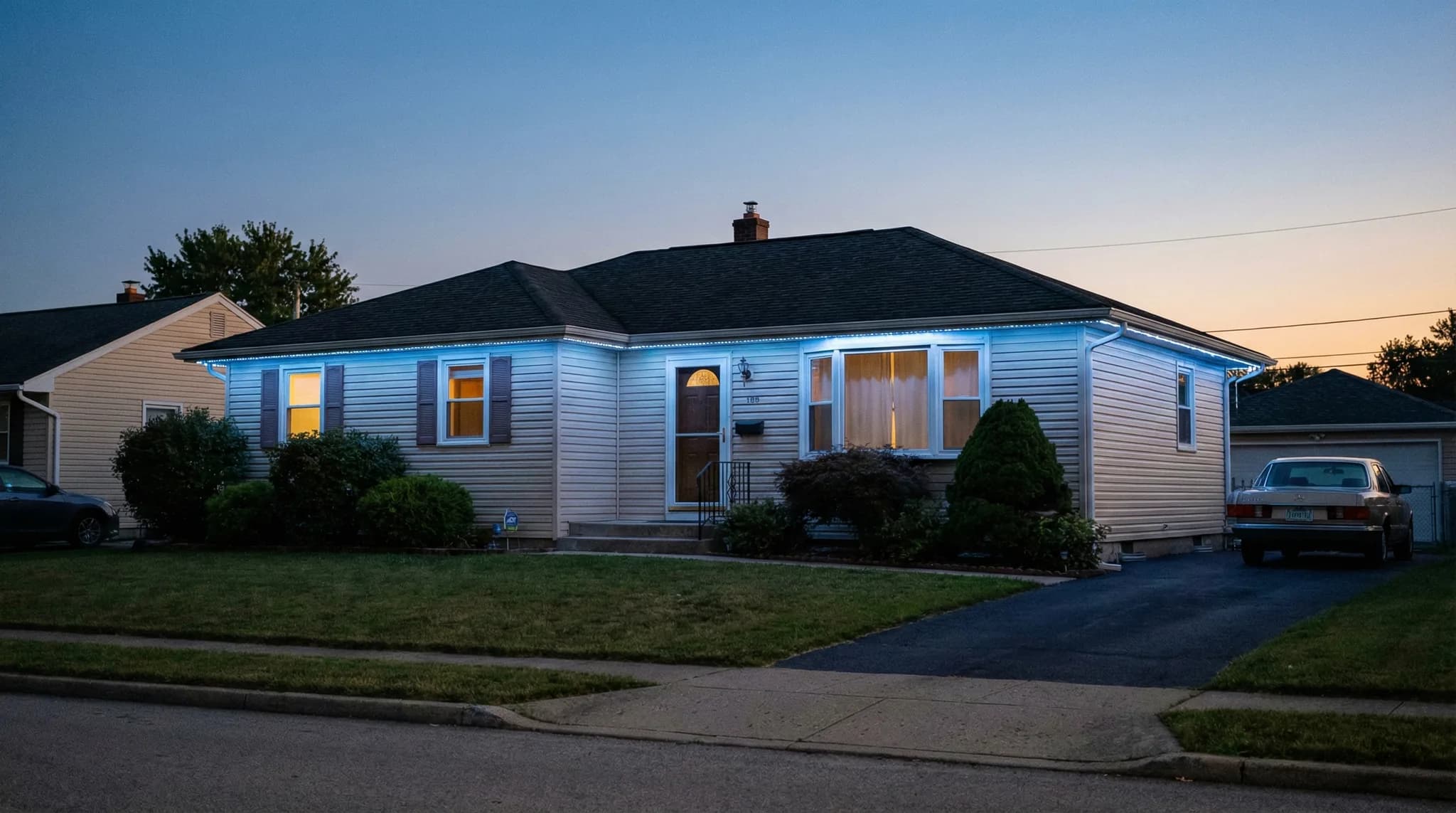
Most people associate permanent outdoor lights with Christmas. Red and green go up in December, come down in January, and the house sits dark for eleven months. But permanent LED lighting systems aren't one-season products. According to Grand View Research, the global outdoor lighting market reached $17.06 billion in 2024 and is projected to hit $28.43 billion by 2030 – driven largely by color-changing, addressable LED technology that homeowners actually use year-round.
The real question isn't whether to install permanent lights. It's which colors to run, and when. This guide breaks down the best color combinations for every season, holiday, and occasion – from a subtle warm white on a Tuesday night to full Sacramento Kings purple on game day. Whether you're in Roseville, El Dorado Hills, or Citrus Heights, these ideas work for any home.
TL;DR: Warm white (2700K–3000K) is the foundation color you'll run 90% of the year. Permanent outdoor LED systems let you switch to holiday themes, team colors, or event lighting in seconds through an app. With the residential sector accounting for 40% of the outdoor lighting market (Grand View Research), color-changing capability is the feature homeowners value most.
Why Is Warm White the Best Default Outdoor Lighting Color?
Warm white in the 2700K–3000K range is the color temperature used by 90% of permanent lighting homeowners as their everyday setting. The residential sector makes up 40% of outdoor lighting market share (Grand View Research, 2024), and warm white dominates because it complements every architectural style without looking seasonal or themed. For a deeper comparison of warm white, cool white, and daylight options, see our full guide to choosing the best color temperature for permanent outdoor lights.
Think of warm white as your "set it and forget it" baseline. It's the soft glow you see on well-lit homes in Folsom or Fair Oaks on any given evening. Not too yellow, not too blue. It highlights rooflines, soffits, and landscaping without screaming for attention. Most homeowners we've worked with across Sacramento keep warm white running from Monday through Friday, then switch to something bolder for weekends or events.
Why does this matter financially? Homes with permanent exterior lighting can see measurable curb appeal improvements. And since modern LED systems draw minimal power – often under $5 per month – running warm white nightly costs less than a cup of coffee weekly. For a deeper breakdown of the numbers, check out our cost guide for permanent outdoor lighting in Sacramento.
What Color Temperature Should You Choose?
Stick with 2700K for a candlelight-like warmth that works beautifully on stucco, stone, and wood-sided homes. Go with 3000K for a slightly brighter, crisper look on modern or painted exteriors. Avoid anything above 4000K for residential use – it reads as commercial and cold, more parking garage than family home.
What Are the Best Outdoor Lighting Colors for Spring and Summer?
Spring and summer in Sacramento mean outdoor entertaining, national holidays, and long evenings that beg for ambient lighting. According to an American Home Shield 2024 survey, 93% of Americans now own at least one smart home device, and 34% of those owners have adopted smart lighting – meaning app-controlled color changes are mainstream, not novelty.
Patriotic Colors for Memorial Day and July 4th
Red, white, and blue is the obvious combination, but execution matters. The best approach alternates solid red and blue zones with white accents in between, rather than cycling all three rapidly (which can look chaotic from the street). Many homeowners in Rocklin and Orangevale run patriotic colors from Memorial Day weekend straight through July 4th – roughly six weeks of use from one seasonal theme.
For a more refined take, try all-white with subtle blue uplighting along the foundation. It reads as patriotic without looking like a fireworks stand.
Sacramento Kings Game Day Colors
Purple and silver (or gray) for the Kings is one of the most popular requests we hear across the Sacramento region. These colors work especially well during the NBA playoffs when neighborhood pride is high. Homes in Rancho Cordova, Citrus Heights, and Roseville light up purple on game nights as a point of local identity.
Pro tip: run a deep royal purple, not lavender. Lavender reads as Easter. A saturated purple with cool white accents captures the Kings' brand accurately.
Easter and Spring Pastels
Soft pink, light purple, pale blue, and mint green create a welcoming spring palette. Keep the intensity lower than you would for bolder holidays. Pastels at full brightness look washed out, so dialing to 60–70% brightness gives them the soft character they need. Run these from late March through mid-April.
Backyard Entertaining and Summer Nights
For barbecues, pool parties, and patio dinners, warm amber tones (2200K–2700K) create an inviting atmosphere without overwhelming conversation. Some homeowners pair amber roofline lighting with soft blue accents along walkways or garden beds for a subtle contrast. This is permanent lighting at its most practical – no string lights to hang, no extension cords to trip over. Already considering an upgrade? Check out why permanent outdoor lights are worth the investment.
Which Colors Work Best for Fall Outdoor Lighting?
Fall brings some of the most dramatic color possibilities. Grand View Research notes a clear consumer shift toward RGB addressable LED with color-changing capabilities as a key purchasing preference – and autumn is where that capability shines. From Halloween to Thanksgiving, fall colors are rich, warm, and universally appealing.
Halloween: Orange, Purple, and Beyond
Halloween is the second-biggest decorating holiday in the United States, and outdoor lighting does most of the heavy lifting. Classic orange and purple is the go-to combination. For a more atmospheric look, try deep red with intermittent green – it creates an eerie, haunted effect that works beautifully on Craftsman and Tudor-style homes common in older Sacramento neighborhoods.
Some systems support chase patterns and slow-fade effects. A slow purple-to-orange fade along the roofline is far more elegant than rapid flashing, which tends to annoy neighbors. If your system supports zones, run orange on the front face and purple on the sides for depth. Keep these running from early October through November 1st.
Thanksgiving and Harvest Themes
Amber, warm gold, burnt orange, and deep red capture the harvest palette perfectly. These colors feel like an extension of fall foliage rather than a holiday decoration. They're subtle enough to run from November 1st through Thanksgiving without anyone thinking your house is still in Halloween mode.
In our experience, this is one of the most-complimented seasonal looks homeowners run. Neighbors notice it without being able to name exactly why the house looks so inviting. That's the mark of good lighting design.
School Homecoming and Team Spirit
High school homecoming is a big deal across Placer and Sacramento counties. Running your school's colors the week before homecoming is an easy way to show spirit. Granite Bay green and gold, Folsom bulldogs blue and gold, Del Oro golden eagles – the combinations are endless. If you're unsure what your system can produce, most modern permanent lighting supports over 16 million color options.
How Should You Set Your Permanent Lights for Winter Holidays?
Winter holidays are the reason most people first consider permanent outdoor lighting. The permanent outdoor lighting segment alone is expected to reach $3 billion by 2025 with a CAGR of 10.2% (Grand View Research) – and the desire to skip the annual ladder climb is the top motivator for new installations.
Christmas: Classic Approaches That Work
There are three Christmas color strategies that consistently look great on homes. Classic red and green remains the most popular, especially when you alternate colors by zone rather than by individual bulb. All-white (cool white at 5000K–6000K) delivers an elegant, icicle-like effect that works on modern and traditional homes alike. And multicolor rainbow creates the nostalgic, playful look that many families with young kids prefer.
Which should you pick? It depends on your home's exterior. Darker siding or stone facades tend to look best with warm red and green. White or light-colored homes pop with cool white or multicolor. Brick homes in Loomis and Auburn handle all three approaches well because the warm brick tone acts as a neutral backdrop.
The biggest advantage of permanent systems over traditional Christmas lights? No installation day. No untangling. No burnt-out bulbs halfway through December. Switch to Christmas mode from your phone on the day after Thanksgiving and you're done. Learn more about how permanent lights compare to traditional Christmas lights.
Hanukkah: Blue and White
Blue and white is clean, striking, and easy to execute. A bright royal blue with crisp cool white accents works best. Alternate zones or set a slow fade between the two colors. Run these during the eight nights of Hanukkah, typically falling in late November through late December.
New Year's Eve: Gold, Silver, and Sparkle
Gold and warm white create a champagne-like shimmer along rooflines. If your system supports sparkle or twinkle effects, New Year's Eve is the time to use them. Some homeowners in El Dorado Hills run a countdown sequence – warm white all evening, then a burst of gold at midnight. It's a small touch that makes the moment feel special.
Valentine's Day: Pink and Red
Soft pink with red accents works for the two weeks leading up to February 14th. Keep it understated – full red can read as aggressive on a house exterior. A blush pink at 50% brightness with a few red zones creates warmth without overwhelming the look. This is another scenario where permanent lights outperform alternatives because no one is climbing a ladder in February for two weeks of decoration.
Can You Use Permanent Outdoor Lights for Special Events?
Event lighting is where permanent outdoor LEDs deliver unexpected value. Smart lighting adoption has reached 34% among device owners (American Home Shield, 2024), and the ability to customize colors for one-time events is a feature most new buyers don't realize they'll use regularly until after installation.
Gender Reveals and Baby Showers
Pink or blue for gender reveals is straightforward and dramatic. Set the house to neutral white during the party, then trigger the color switch at the reveal moment through the app. It's become a popular alternative to confetti cannons or balloon pops in neighborhoods across Roseville and Granite Bay. The lighting stays up for a few days afterward, letting the whole neighborhood share the news.
Birthdays and Graduation Parties
Match the party theme or the school's colors. Purple and gold for a college-bound senior. Bright rainbow for a kid's birthday. Teal and silver for an elegant milestone celebration. The versatility here is limitless. What other exterior decoration lets you change the entire mood of your home in thirty seconds?
Awareness Campaigns
Pink for breast cancer awareness in October. Blue for autism awareness in April. Red for heart disease awareness in February. Yellow for childhood cancer awareness in September. Running awareness colors is a meaningful way to show support, and it takes exactly one tap in the app. Homeowners in Fair Oaks and Orangevale have told us this is one of the most personally rewarding uses of their lighting system.
Game Day Beyond the Kings
Sacramento State (green and gold), UC Davis (blue and gold), San Francisco 49ers (red and gold), Golden State Warriors (blue and gold) – any team, any game. Run the colors the night before a big matchup. It's neighborhood-level fandom that's visible from the street. And unlike a flag or banner, it lights up your whole property.
What Color Combinations Should You Avoid?
Not every color pairing works well on a house exterior. Grand View Research's market data shows addressable RGB LED adoption is accelerating, but having 16 million colors available doesn't mean you should use them all at once. Restraint is what separates a beautiful lighting display from a distracting one.
Combinations That Work
- Two-color palettes: Stick to two main colors plus white as an accent. This applies to nearly every holiday and event.
- Analogous colors: Colors next to each other on the color wheel (like orange and red, or blue and purple) always look cohesive.
- Complementary with restraint: Red and green work for Christmas because tradition overrides the usual "clash" concern. But purple and yellow? Proceed with caution.
- Monochromatic gradients: Different shades of one color (light blue to deep blue, for example) create depth and sophistication.
Combinations to Skip
- More than three colors at full brightness: It reads as carnival, not residential. If you want multicolor, reduce brightness to 50–60%.
- Rapidly flashing or strobing effects: Some systems offer this. Don't use it. It annoys neighbors and can trigger photosensitive conditions. Many HOAs in Rocklin and Granite Bay have explicit rules against strobe effects.
- Neon green as a primary color: It works as a small accent for Halloween but looks garish as a roofline color. Keep it to 10–15% of your total display.
- Mismatched cool and warm whites: Running 3000K warm white next to 6000K cool white creates an inconsistent, accidental-looking display. Pick one white temperature and stick with it.
How Zones Give You Flexibility
Most permanent lighting systems divide your roofline into controllable zones. This means your front face can run one color scheme while the sides run another. Zones are essential for depth – a flat, single-color wash looks less dynamic than a front-to-side gradient. During installation, discuss zone placement with your installer. More zones means more creative flexibility. Learn what the installation process looks like step by step.
Quick Reference: Colors for Every Season and Occasion
With the outdoor lighting market growing from $17.06 billion to a projected $28.43 billion by 2030 (Grand View Research), color-changing LED is becoming standard for residential homes. Here's a season-by-season reference to save in your phone for quick app changes throughout the year.
| Season / Occasion | Recommended Colors | Suggested Timeframe |
|---|---|---|
| Everyday Default | Warm White (2700K–3000K) | Year-round baseline |
| Easter / Spring | Soft pink, light purple, pale blue, mint green | Late March – mid-April |
| Memorial Day | Red, white, blue | Memorial Day weekend |
| July 4th | Red, white, blue (zoned) | Late June – July 4th |
| Summer Entertaining | Warm amber (2200K–2700K), soft blue accents | May – September evenings |
| Halloween | Orange, purple; or deep red, green | October 1 – November 1 |
| Thanksgiving / Harvest | Amber, warm gold, burnt orange, deep red | November 1 – Thanksgiving |
| Christmas | Red & green, all-white, or multicolor | Day after Thanksgiving – early January |
| Hanukkah | Royal blue, crisp white | Eight nights (late Nov – late Dec) |
| New Year's Eve | Gold, warm white, sparkle effects | December 31 – January 1 |
| Valentine's Day | Blush pink, red accents | February 1 – 14 |
| Gender Reveal | Pink or blue (app-triggered switch) | Day of event + a few days |
| Kings Game Day | Deep purple, silver/cool white | Game nights (October – June) |
| Breast Cancer Awareness | Pink | October |
| Homecoming | School colors | Homecoming week |
Frequently Asked Questions
How many colors can permanent outdoor LED lights display?
Most modern permanent LED systems support over 16 million colors through RGB and RGBW technology. Grand View Research identifies the shift toward addressable, color-changing LED as a key consumer trend driving market growth toward $28.43 billion by 2030. In practical terms, you can match virtually any color you see on a screen to your home's exterior lighting.
Do color-changing lights cost more to run than single-color LEDs?
No. Color-changing LED systems use the same amount of electricity regardless of which color is displayed. The power draw is determined by the number of LEDs and their brightness setting, not the color output. Most whole-home systems cost $3–$8 per month to operate. For full pricing details, see our Sacramento cost guide.
Can I schedule color changes automatically through the app?
Yes. With 93% of Americans owning at least one smart home device (American Home Shield, 2024), most permanent lighting systems integrate with existing smart home platforms. You can pre-schedule color themes weeks in advance – Halloween colors start October 1st, Christmas colors the day after Thanksgiving, then back to warm white on January 2nd. No manual adjustments needed.
Will bright or unusual colors bother my neighbors or violate HOA rules?
Most HOAs restrict flashing, strobing, or excessively bright displays rather than specific colors. We've found that static color displays at moderate brightness rarely trigger complaints. Before installation, check your HOA's CC&Rs for any lighting-specific guidelines. Communities in Rocklin, Granite Bay, and parts of El Dorado Hills tend to have the most detailed outdoor lighting rules. Visit our FAQ page for more on HOA considerations.
How long do permanent outdoor lighting systems last?
Quality permanent LED systems last 15–25 years with minimal maintenance. LEDs degrade gradually rather than burning out suddenly, so color accuracy remains strong throughout the lifespan. For a detailed breakdown of durability and what affects longevity, read our guide on how long permanent outdoor lights last.
Ready to Light Your Home for Every Season?
Permanent outdoor lighting gives you a single installation that works for every holiday, season, and event on the calendar. Warm white for weeknights. Purple and silver for Kings games. Red, white, and blue for the Fourth. Orange and purple for Halloween. Red and green for Christmas. All from your phone, without touching a ladder.
EXT Lighting installs permanent LED systems across the Sacramento region, including Roseville, Folsom, El Dorado Hills, Rocklin, Auburn, Grass Valley, and all surrounding areas. Whether you're looking for residential lighting or commercial solutions, we design systems with the zones and color capabilities covered in this guide.
Curious what it would look like on your home? Request a free quote and we'll walk you through color options, zone planning, and pricing – no obligation.