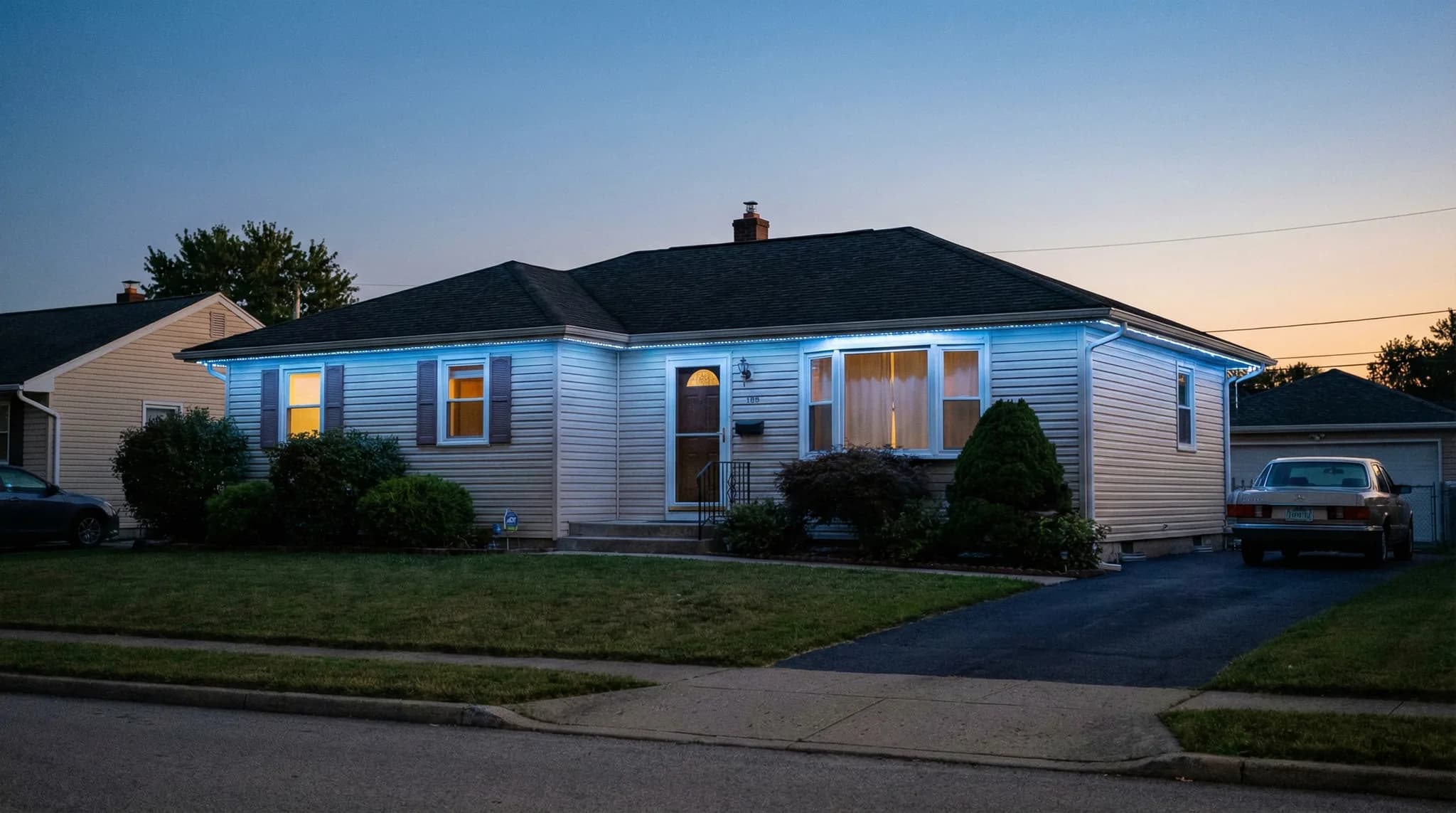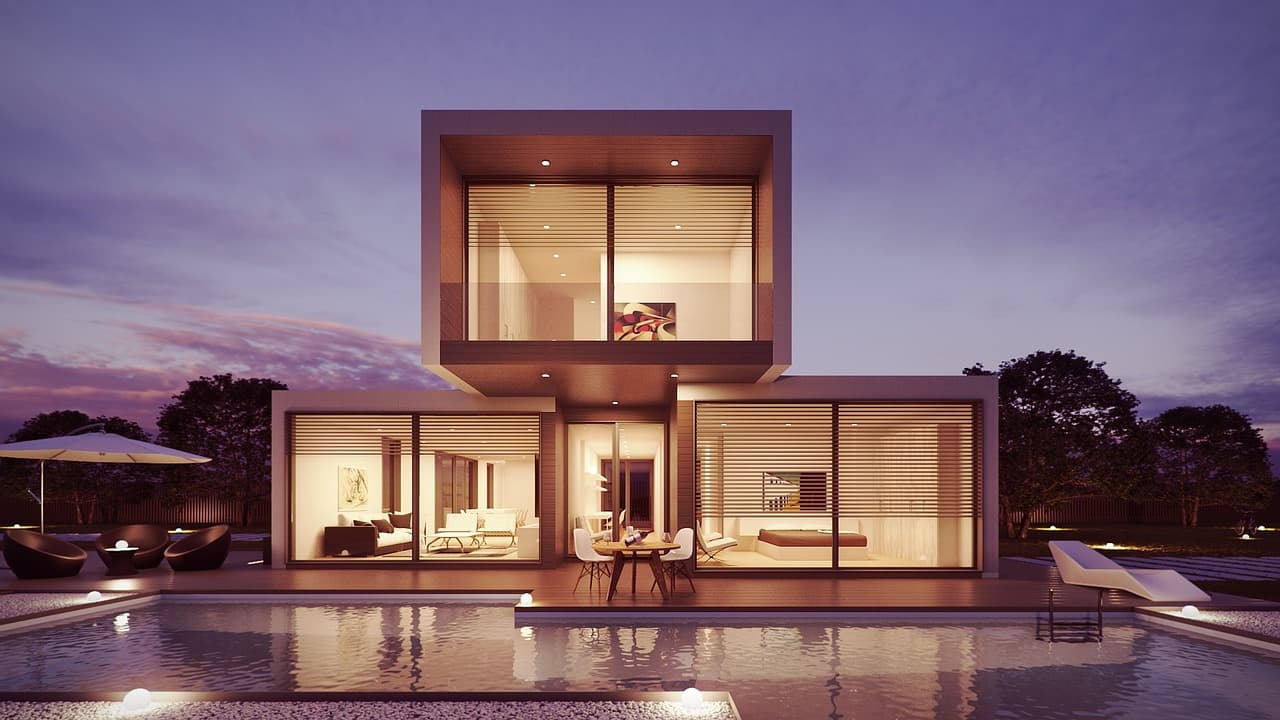
Dark sky compliant permanent outdoor lights mount under the fascia, default to warm 2700K color temperatures, and stay below the brightness thresholds Sacramento County zoning code uses to evaluate exterior lighting.
Dark sky compliant permanent outdoor lights are the easiest way for Sacramento County homeowners to add roofline lighting without running into county zoning code, HOA architectural review, or neighbor complaints. The same fascia-mounted, app-controlled LED systems that EXT Lighting installs across Sacramento, Roseville, and Rocklin already meet the four design principles that DarkSky International (formerly the International Dark-Sky Association) publishes for residential exterior lighting – you just need to configure the brightness, color temperature, and schedule correctly.
Sacramento County does not have a single “dark sky ordinance” like Flagstaff, Arizona or Tucson. Instead, residential exterior lighting is governed by a combination of county zoning code, the City of Sacramento's lighting standards, California nuisance law, California Title 24 energy code, and individual HOA CC&Rs. The good news: well-configured permanent LED systems satisfy all of these frameworks at once because they default to warm color, downward direction, and limited brightness.
This guide covers exactly what dark sky compliance means in Sacramento County, which county and city codes apply to roofline LED lights, how to configure your system to meet DarkSky International's five principles, and which Sacramento-area neighborhoods and HOAs are most strict. If you are still weighing the broader pros and cons of permanent lights, our full guide to permanent lights and light pollution covers neighbor relations and California nuisance law in more depth.
TL;DR: Dark sky compliant permanent outdoor lights mount under the fascia (downward-facing), default to 2700K warm white at 40–60% brightness, and dim or shut off automatically after 10 PM. Sacramento County's zoning code requires exterior lighting to be shielded and directed away from adjacent residential properties, and California Title 24 caps residential outdoor lighting at 5 watts per linear foot. Permanent LED systems meet both standards at default settings. The five DarkSky principles – useful, targeted, low level, controlled, and warm-colored – line up directly with how modern roofline LED systems are designed. The only configuration step most Sacramento homeowners miss is the after-hours dim schedule.
What “Dark Sky Compliant” Actually Means for Residential Lighting
“Dark sky compliant” is a phrase used loosely in the residential lighting industry, so it helps to nail down exactly what it means before evaluating any product or installer. There are two separate frameworks that the term refers to:
- DarkSky International's five principles: A design philosophy any homeowner can apply to any property. These are not codified law. They are guidelines published by DarkSky International (the nonprofit formerly known as the International Dark-Sky Association) that describe how to use outdoor lighting responsibly. The five principles are: useful, targeted, low level, controlled, and warm-colored.
- DarkSky Approved fixture certification: A formal product certification program. Individual luminaires can be tested and certified by DarkSky International if they emit zero light above the horizontal plane (full cutoff) and use a correlated color temperature of 3000K or lower. This certification applies to specific fixture models, not to entire lighting systems.
Most permanent roofline LED systems on the market – including the systems EXT Lighting installs – are not individually certified DarkSky Approved fixtures because the program is fixture-specific and most channel-mounted permanent LEDs predate the certification category. However, the installation easily satisfies all five DarkSky principles when configured properly. That distinction matters when an HOA architectural committee asks for a certification number versus when they ask for proof of compliant design.
Sacramento County Zoning Code: What the Lighting Standards Actually Require
Sacramento County's exterior lighting standards live primarily in the County Zoning Code (Title 5 of the Sacramento County Code) under the development standards for residential zones, plus the broader nuisance provisions in the County Code. Section numbers shift with ordinance updates, so always confirm the current section through the Sacramento County Planning and Environmental Review Division before submitting a permit. As of the most recent published code, the requirements that apply to residential roofline lighting include:
- Shielded and directed away from adjacent residential properties: Sacramento County zoning code requires exterior lighting in residential and mixed-use zones to be shielded and aimed so that the light source itself is not visible from adjacent residential lots, and so the lighting does not produce glare onto streets or neighboring homes.
- Light trespass thresholds at the property line: The county follows the general regional standard that residential property line illumination should not exceed a low foot-candle threshold (West Sacramento codifies this at 0.3 foot-candles, and unincorporated Sacramento County applies a similar reasonableness test through its nuisance provisions).
- No flashing or strobing exterior lighting in residential zones: The county's general nuisance and zoning provisions treat persistent flashing or strobing exterior light as a nuisance condition.
- Exterior lighting permits for fixed installations: Hard-wired exterior lighting that requires modification to the home's electrical panel typically triggers an electrical permit through the Sacramento County Building Permits and Inspections Division. Plug-in or low-voltage permanent LED systems generally do not require a permit.
For the full breakdown of what does and does not need a permit, see our guide on whether permanent outdoor lights need an electrician or permit in Sacramento.
Sacramento County Exterior Lighting Compliance Checklist
The pattern in the chart above repeats across most Sacramento County exterior lighting requirements: the structural design of a fascia-mounted permanent LED system handles the physical shielding and direction questions automatically, and the remaining items are single-time app configuration choices that take less than five minutes.
The Five DarkSky International Principles, Applied to Permanent Outdoor LEDs
DarkSky International publishes five principles for responsible outdoor lighting that apply to any property, anywhere. Each principle has a direct, specific implementation in a permanent LED roofline system. Sacramento homeowners who configure their system around these five principles will satisfy nearly every county code, HOA rule, and neighbor concern at the same time.
1. Useful: Have a Clear Purpose for Every Light
DarkSky's first principle: light should serve a defined purpose – safety, wayfinding, or task lighting. Decorative lighting is allowed, but every fixture should have a reason for being on. Permanent LED systems make this easy because zone control lets you light only the sections of your home that serve a current purpose. Front roofline on for curb appeal during evening hours, side-yard channels off when no one is back there, party-mode multi-color only during gatherings.
2. Targeted: Direct Light Only Where It Is Needed
Light should be aimed at the surface or area it is meant to illuminate, with shielding to prevent spill. Roofline-mounted permanent LEDs naturally satisfy this principle because the channel mounts horizontally under the fascia and projects the light beam downward and outward toward the ground. Compare this to a wall-mounted floodlight aimed outward at 45 degrees, or a landscape uplight aimed straight up at a tree, both of which violate principle 2 by design.
3. Low Level: Use the Minimum Brightness That Achieves the Goal
Most outdoor lighting is brighter than it needs to be. A residential perimeter installation does not need 100% LED brightness for security, decor, or wayfinding. The DarkSky-aligned default for a permanent LED system is 40–60% nightly brightness, with full intensity reserved for parties, holidays, or specific safety scenarios. For the brightness-by-occasion breakdown, see our electricity cost guide which also covers the wattage savings at lower brightness levels.
4. Controlled: Use Lights Only When Necessary
Lights left on all night cause more problems than lights on a schedule. Permanent LED systems let you build automated schedules: on at sunset, dim at 10 PM, off at midnight, with motion-activated boost zones for security if needed. This is the principle most Sacramento homeowners under-configure on day one. Setting a 10 or 11 PM dim schedule is the single most effective change you can make for both compliance and neighbor relations.
5. Color: Use Warmer Color Temperatures
DarkSky International recommends correlated color temperatures of 3000K or lower for residential outdoor lighting, with 2700K as the preferred default. Warmer light contains less blue light, scatters less in the atmosphere, produces less skyglow, and is less disruptive to human and wildlife circadian rhythms. Permanent LED systems offer 2700K as a one-tap preset on most apps. For the full color-temperature breakdown, our guide on warm vs cool white outdoor lights covers when each Kelvin range is appropriate.
Pro Tip
When you submit your permanent lighting plan to a Sacramento County HOA architectural committee or to a planning officer, attach a one-page summary that lists each of the five DarkSky principles with the corresponding system setting next to it (for example: “Principle 5 – warm color: system default 2700K”). Reviewers rarely see this level of preparation, and it almost always shortens the approval cycle. For help framing the review submission, see our Sacramento HOA rules guide.
California Title 24: The Statewide Energy Cap That Already Helps You Comply
California's Title 24 Building Energy Efficiency Standards include a residential outdoor lighting provision that quietly does most of the dark sky compliance work for homeowners. The current standard caps low-rise residential outdoor lighting at 5 watts per linear foot of building perimeter when the lighting is high-efficacy LED, with even tighter caps for non-LED fixtures.
Permanent LED roofline systems run roughly 1.5 to 2.5 watts per linear foot at full brightness depending on fixture density and chip type. That puts a typical full-perimeter installation at less than half the Title 24 cap before you dim it. Run the system at the DarkSky-aligned 40–60% default brightness and the actual draw drops to roughly 0.6 to 1.5 watts per linear foot – about one-third to one-fifth of what state code allows.
Why this matters: Title 24 compliance is one of the items that Sacramento County building officials check during any electrical permit review. Because permanent LED systems are inherently efficient, the wattage compliance question almost never becomes a friction point for residential installations. The product class is built around chip-on-board LED architecture that already meets the standard.
Watts Per Linear Foot: Permanent LED vs. Title 24 Cap
City of Sacramento and West Sacramento: Stricter Property Line Standards
Inside Sacramento city limits, the City of Sacramento Lighting Standards (Sacramento City Code Section 15.40.030 and adjacent provisions) tighten the county-level requirements further. The city requires that exterior lighting be:
- Directed away from adjacent residential uses and reflected away from residential areas and public streets.
- Designed and shielded so that the light source itself is not directly visible from adjacent residential lots.
- Limited so that lighting does not create glare or excessive illumination at the property boundary.
West Sacramento applies a specific numerical limit: 0.3 foot-candles maximum at the property line. This is the most concrete number in the regional code library, which is why it gets cited most often. A permanent LED system at 40–60% brightness, mounted under the fascia, typically measures less than 0.2 foot-candles at the property line in Sacramento-area lot configurations – comfortably under the West Sacramento threshold.
Outside city limits, in unincorporated Sacramento County, the same kinds of values are applied through the county's general nuisance and zoning provisions rather than a single foot-candle number. The practical compliance approach is identical: keep brightness moderate, mount downward, and dim after hours.
Sacramento Neighborhoods With the Strictest Lighting Rules
Sacramento County contains roughly 1,500 HOAs governing 135,000 housing units. The rules vary widely, but a few neighborhoods and HOA tiers are consistently stricter on exterior lighting than the county baseline. Homeowners in these areas should plan for a more detailed architectural review submission.
| Area / HOA Tier | Typical Restrictions | Compliance Path |
|---|---|---|
| Granite Bay master-planned | Warm white only, no visible fixtures, no flashing | Submit fascia mockup, lock 2700K default |
| El Dorado Hills (Serrano, Promontory) | Strict design review, hidden channel preferred | Color-matched track, full-cutoff certification |
| Roseville (West Park, Diamond Creek) | Static colors only, holiday limits 30–45 days | Schedule holiday windows in app upfront |
| Folsom (Empire Ranch, Lake Natoma) | Track must match fascia; no exposed wiring | Color-matched aluminum channel install |
| Land Park / Curtis Park (city) | Historic district considerations, dense lots | Lower brightness defaults (30–40%) |
| Rocklin (Whitney Ranch) | Architectural committee approval required | DarkSky principles summary in submission |
For the full HOA approval workflow – including the California Civil Code 4765 timing requirements that limit how long an HOA can take to respond to your application – see our dedicated Sacramento HOA rules guide.
Need a Dark Sky Compliant Lighting Design for a Sacramento HOA Submission?
EXT Lighting builds every Sacramento, Roseville, Rocklin, Folsom, and El Dorado Hills installation around DarkSky International's five principles by default – warm 2700K color, downward-mounted channels, automated dim schedules, and full Title 24 compliance documentation. Free on-site consultations across Sacramento County.
Schedule Your Free ConsultationConfiguring Your Permanent Lights for Sacramento County Dark Sky Compliance
If your permanent LED system is already installed, the following five-step configuration brings it into alignment with Sacramento County code, City of Sacramento standards, and the DarkSky principles in less than 15 minutes. Each step happens inside your lighting app.
- Set the default scene to 2700K warm white. Save it as the “Daily” or “Default” scene. This is the color you will run on most evenings of the year. If your system supports it, lock the 2700K preset to prevent accidental drift to cooler temperatures.
- Cap default brightness at 50%. Build a brightness ceiling for the default scene. If you want a brighter look for a specific occasion, you can boost temporarily, but the default should never exceed 60%.
- Schedule sunset-on, 10 PM dim, midnight off. Use your app's location-based sunset trigger so the lights track Sacramento's seasonal sunset shift automatically. Add a transition that drops to 15–20% at 10 PM, then to off at midnight. Adjust the off time to your household's actual habits.
- Disable flashing and strobing presets in the default scene. Most systems ship with rapid-flash holiday presets that violate residential nuisance provisions if used outside of holiday windows. Move those presets into a clearly named “Holidays” folder so they cannot be triggered accidentally.
- Walk the property line and verify. Stand at every property edge (front, both sides, back) at full dark and confirm the lights are not casting visible beams onto neighboring lots. If you can see the LED chips themselves from a neighbor's sidewalk, the install needs a slight aim adjustment from your installer.
Pro Tip
Take a phone photo from each neighbor's property line after your dark-sky configuration is complete and save it to your home maintenance folder. If a complaint or HOA inquiry comes up later, you have time-stamped evidence that the lights were configured to compliant settings on a specific date. This single habit resolves most disputes within one email exchange. For the broader troubleshooting playbook, see our guide on permanent outdoor lights troubleshooting.
What About DarkSky Approved Fixture Certification?
DarkSky International maintains a formal product certification program called DarkSky Approved (formerly Fixture Seal of Approval). Certified fixtures must emit zero light above the horizontal plane (full cutoff) and use a correlated color temperature of 3000K or lower. As of 2026, the program covers thousands of individual luminaires from manufacturers across the residential and commercial categories.
Most channel-mount permanent LED systems on the market are not individually DarkSky Approved certified, for two reasons. First, the certification program is fixture-specific, and channel-mounted systems are evaluated as a system rather than as a single luminaire. Second, the program emphasizes traditional fixtures (bollards, wall packs, area lights) and has only recently begun adding categories for newer architectural lighting types.
For Sacramento County HOA architectural review, the absence of a DarkSky Approved certification number is rarely an issue. What committees typically want to see is:
- Confirmation that the fixtures are full cutoff (no upward light spill).
- The default color temperature in the system documentation (2700K satisfies all known Sacramento-area HOA tiers).
- A planned scheduling and dimming approach.
- A photo or rendering showing how the channel will appear once installed.
Providing this documentation in your application is faster than chasing a fixture certification, and it directly answers the architectural committee's actual concerns.
Wildlife and the American River Parkway: Why Sacramento's Geography Matters
Sacramento County borders some of California's most active wildlife corridors, including the American River Parkway, Cosumnes River Preserve, and Effie Yeaw Nature Area. Homes within roughly half a mile of these corridors should pay extra attention to dark sky principles for ecological reasons that go beyond county code.
Artificial light at night is documented to interfere with migratory bird navigation (especially during fall and spring migration windows), insect reproductive behavior, and mammal activity patterns. The Audubon California chapter and the California Department of Fish and Wildlife both publish lighting guidance for residential properties near wildlife corridors, and that guidance lines up almost perfectly with DarkSky's five principles.
Practical implications for Sacramento homeowners near these corridors:
- Use 2700K warm white exclusively (not 3000K, which is acceptable elsewhere).
- Run lower default brightness (25–40%) instead of the standard 40–60% residential default.
- Schedule a hard off at 10 PM rather than a dim, especially during the fall and spring bird migration windows.
- Avoid blue, white, and cool color presets for nightly use even outside the holiday season.
These adjustments still leave the system fully usable for curb appeal during the early evening hours and for full-color holiday displays during defined windows.
Comparing Permanent LED to Other Outdoor Lighting on Dark Sky Compliance
Not all residential outdoor lighting types are created equal when it comes to dark sky compliance. Permanent LED systems are structurally advantaged because they ship with the controls that the DarkSky principles require. Here is how the major residential categories compare:
| Lighting Type | Full Cutoff | 2700K Default | App Schedule | Title 24 OK | DarkSky Score |
|---|---|---|---|---|---|
| Permanent LED (fascia) | Yes | Yes | Yes | Yes | 5 / 5 |
| Smart wall floodlight | No | Sometimes | Yes | Yes | 3 / 5 |
| Standard halogen flood | No | No | No | No | 0 / 5 |
| Landscape uplights | No (by design) | Sometimes | Timer | Yes | 1 / 5 |
| Solar path lights | Yes | Varies | Dusk-to-dawn | Yes | 3 / 5 |
| Christmas string lights | No | No | Timer | Varies | 1 / 5 |
Permanent LED is the only residential category that scores 5 out of 5 across the compliance dimensions that Sacramento County, the City of Sacramento, and DarkSky International all care about. That structural advantage is the reason architectural committees increasingly prefer permanent LED submissions over wall-mounted floodlight retrofits.
Frequently Asked Questions
Are permanent outdoor lights dark sky compliant in Sacramento County?
Yes, when configured correctly. Permanent LED systems mount under the fascia (full cutoff downward), default to warm white at 2700K, and offer app-based scheduling and dimming – the four design choices that satisfy Sacramento County zoning code, California Title 24 energy standards, and DarkSky International's five principles at the same time. The two configuration steps most homeowners need to confirm are a 50% default brightness ceiling and a 10 PM dim or off schedule.
Does Sacramento County have a dark sky ordinance?
Sacramento County does not have a dedicated dark sky ordinance like Flagstaff or Tucson. Residential exterior lighting is regulated through the County Zoning Code (general development standards in residential zones), the County's nuisance provisions, and California Title 24 energy code. The City of Sacramento adds Section 15.40.030 lighting requirements within city limits, and West Sacramento codifies a 0.3 foot-candle limit at the property line.
What is the lowest color temperature DarkSky International recommends?
DarkSky International recommends correlated color temperatures of 3000K or lower for residential outdoor lighting, with 2700K as the preferred default. Warmer color temperatures contain less blue light, scatter less in the atmosphere, produce less skyglow, and are less disruptive to human and wildlife circadian rhythms. Most permanent LED systems offer 2700K as a one-tap preset.
Do I need a permit for permanent outdoor lights in Sacramento County?
It depends on the power source. Permanent LED systems that hard-wire into the home's electrical panel typically require an electrical permit through the Sacramento County Building Permits and Inspections Division and a licensed electrician for the panel connection. Plug-in systems that use an existing exterior outlet generally do not require a permit. For the full breakdown, see our guide on permits and electricians for permanent outdoor lights in Sacramento.
What is the maximum brightness allowed at the property line in Sacramento?
West Sacramento sets a specific 0.3 foot-candle limit at the property line. The City of Sacramento and unincorporated Sacramento County apply similar reasonableness tests through their lighting and nuisance provisions. A permanent LED system at 40–60% default brightness, mounted under the fascia, typically measures less than 0.2 foot-candles at the property line in standard Sacramento-area lot configurations.
Are DarkSky Approved certified fixtures required for HOA approval?
No. DarkSky Approved (formerly Fixture Seal of Approval) is a fixture-specific certification that most channel-mounted permanent LED systems do not carry, but Sacramento-area HOA architectural committees almost never require the certification number. What committees do want is documentation showing full-cutoff design, a 2700K default color temperature, a planned schedule, and a fixture appearance that matches the home's fascia. Submitting this documentation is faster and more effective than chasing a certification.
Will dark sky compliant settings reduce my electricity bill?
Yes, meaningfully. Running a permanent LED system at 50% brightness instead of 100% reduces wattage roughly proportionally, dropping a typical full-perimeter installation from $6–$8 per month to $3–$4 per month on SMUD residential rates. Adding a 10 PM auto-off schedule instead of leaving lights on until sunrise cuts another 50–70% off the monthly cost. For a full SMUD rate breakdown, see our electricity cost guide.
Dark Sky Compliant Permanent Lights, Designed for Sacramento County
EXT Lighting installs every Sacramento, Roseville, Rocklin, Folsom, and El Dorado Hills system with full-cutoff fascia mounting, 2700K warm white defaults, and pre-built dim schedules so your lights satisfy county code, Title 24, and DarkSky International's principles from day one. Lifetime warranty on parts and labor.
Get Your Free Lighting Design