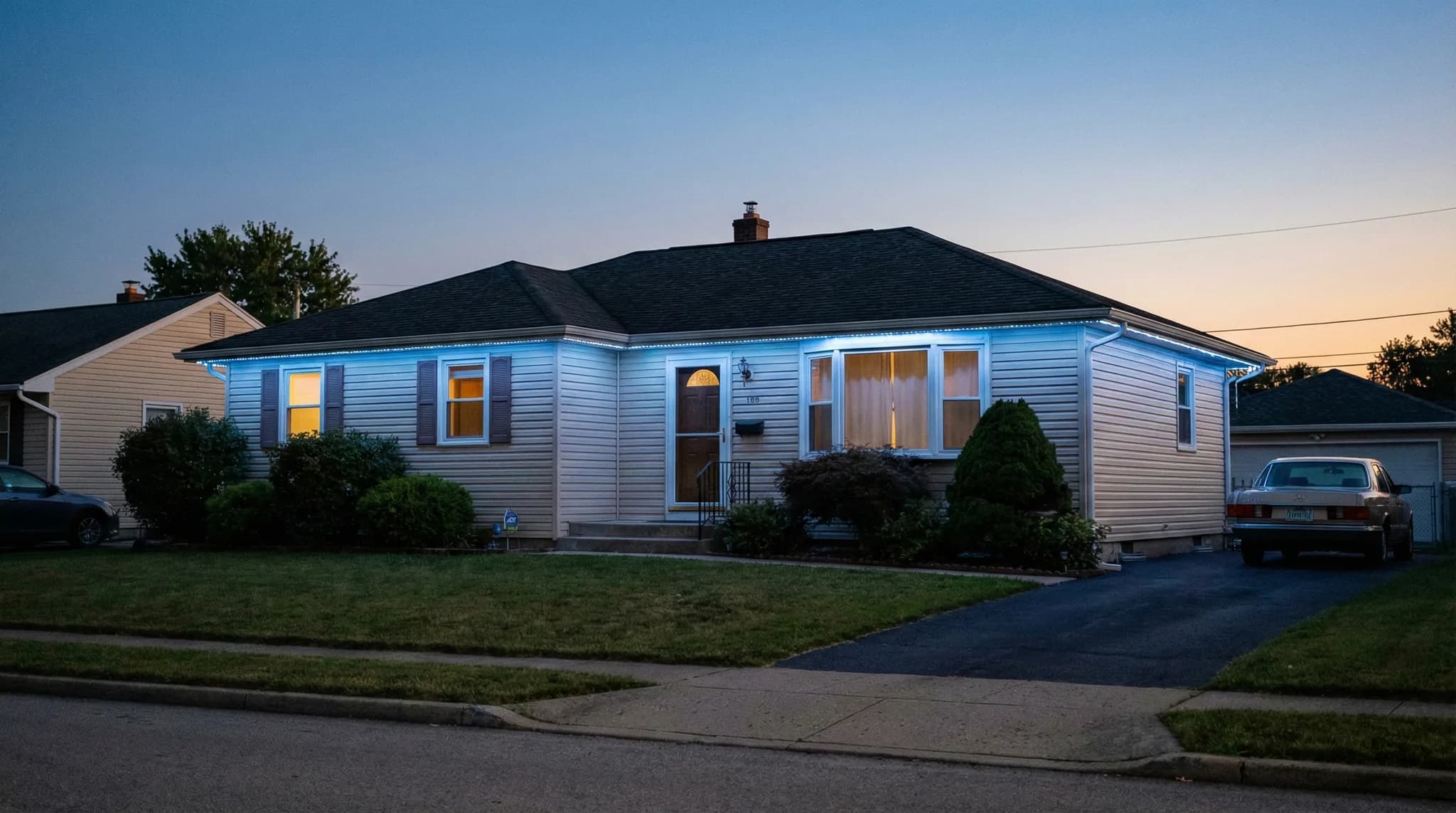
Sacramento's climate gives homeowners a clear advantage when it comes to outdoor projects – but it also creates a narrow window where conditions are genuinely ideal. March through May delivers the kind of mild, dry weather that makes permanent outdoor light installation straightforward and safe. Wait too long, and you're fighting triple-digit heat or competing with every other homeowner who had the same idea.
According to the Harvard Joint Center for Housing Studies, U.S. home improvement spending reached $611 billion in 2022 and has remained above $600 billion through 2025 – roughly 50% above pre-pandemic levels. Outdoor projects are a major driver of that spending. About two out of three homeowners plan exterior or outdoor projects in 2026, with average spending around $21,000 per household (HIRI). That's a lot of demand chasing a limited pool of qualified installers.
This guide breaks down exactly when to schedule your permanent lighting installation in Sacramento, why timing matters more than most people realize, and how to avoid the scheduling bottleneck that delays projects every year. If you're already familiar with what the installation process looks like, this will help you pick the right month to pull the trigger.
TL;DR: March through May is the best time to install permanent outdoor lights in Sacramento. Average highs range from 68°F to 81°F, rain drops below 1 inch per month, and contractor availability hasn't hit peak-season bottlenecks yet. Sacramento averages just 4 rainy days in May and 0 in July (NOAA climate normals). Book by early March for the widest scheduling options.
When Is the Best Time to Install Permanent Outdoor Lights in Sacramento?
March through May is the sweet spot. Sacramento's average high temperatures during these months range from 68°F to 81°F, and monthly rainfall drops from 2.8 inches in March to just 0.8 inches in May (NOAA 1991–2020 climate normals). That combination of comfortable working temperatures and minimal rain disruption makes spring the clear winner for scheduling installation.
Why does weather matter so much for a lighting installation? Permanent outdoor lights mount along your roofline, soffits, and fascia. Installers work on ladders and lifts for several hours. Wet surfaces create slip hazards. Extreme heat creates fatigue risks. And rain delays push your project back day by day, extending the timeline and sometimes the cost.
Spring also lines up with Sacramento's real estate rhythm. Local appraiser Ryan Lundquist notes that the housing market "tends to hit more of a stride in March" (Sacramento Appraisal Blog, 2026). If you're thinking about curb appeal ahead of a potential sale, getting your lights installed before the spring market heats up makes strategic sense. For details on how lighting affects home value, see our ROI analysis for permanent outdoor lights.
The Spring Installation Timeline
A typical permanent lighting installation takes one day for most residential homes. But the full process – from initial consultation to completed project – spans two to four weeks depending on scheduling availability. Here's what that looks like in spring:
- Week 1: Request a quote and schedule your property assessment
- Week 2: Receive your custom design proposal and approve the plan
- Week 3–4: Installation day (weather permitting)
Starting the process in early March puts your installation in late March or April – right in the heart of the ideal weather window. Our installation process guide covers each step in detail.
Why Does Sacramento's Climate Make Spring the Ideal Window?
Sacramento's Mediterranean climate creates distinct wet and dry seasons that directly affect outdoor project scheduling. NOAA data shows the region averages just 0.8 inches of rain in May compared to 3.7 inches in January (NOAA 1991–2020 normals). That 79% drop in precipitation between winter and late spring is why contractors across the region shift into high gear once the rain tapers off.
But it's not just about rain. Temperature plays an equally important role. Roofline work requires installers to spend extended time on ladders and lifts, often in direct sun. Sacramento's spring temperatures stay in a productive range – warm enough for comfortable outdoor work, cool enough to avoid heat-related safety concerns.
Month-by-Month Weather Comparison for Installation
The table below uses NOAA 30-year climate normals (1991–2020) for Sacramento. It shows why the March–May window stands out, and why summer months become problematic.
| Month | Avg High (°F) | Rain (inches) | Rainy Days | Installation Rating |
|---|---|---|---|---|
| January | 57°F | 3.7" | 10 | Poor – frequent rain delays |
| February | 62°F | 3.5" | 9 | Poor – still rainy season |
| March | 68°F | 2.8" | 9 | Good – rain tapering off |
| April | 74°F | 1.2" | 5 | Excellent – ideal conditions |
| May | 81°F | 0.8" | 4 | Excellent – dry, warm |
| June | 89°F | 0.2" | 1 | Fair – heat becoming a factor |
| July | 94°F | 0.0" | 0 | Poor – extreme heat risk |
| August | 94°F | 0.0" | 0 | Poor – extreme heat risk |
| September | 89°F | 0.3" | 1 | Fair – still hot early month |
| October | 79°F | 0.9" | 3 | Good – fall backup window |
April and May score the highest because they combine comfortable temperatures with almost no rain. March is strong too, though a few rainy days can still cause minor schedule shifts. By June, the heat becomes a real concern for rooftop work.
What Happens If You Wait Until Summer?
Sacramento averages 23 days per year above 100°F, with most concentrated between June and September (NOAA via climatestotravel.com). In 2024, the region recorded a record 45 triple-digit days. Working on a roof or along a fascia board in that kind of heat isn't just uncomfortable – it's a genuine safety hazard for installation crews.
We've found that summer installations in the Sacramento area typically require early-morning start times – crews arriving at 6 or 7 AM to get as much work done as possible before the heat peaks. On days above 100°F, outdoor roofline work may need to pause entirely by early afternoon. What could be a single-day installation in April sometimes stretches to two days in July.
Heat Affects More Than Just Scheduling
Extreme heat also impacts the materials themselves. Adhesives and sealants used in permanent light installations can behave differently at high temperatures. Metal mounting channels expand in the heat. And the roofing materials your installer walks on become soft and more susceptible to damage when baking in direct summer sun. None of these are deal-breakers, but they add complexity that doesn't exist in spring.
The Summer Scheduling Crunch
Here's the other problem with waiting. Everyone else is booking at the same time. The NAHB projects 3% growth in remodeling activity for 2026, and summer is when demand peaks across all outdoor trades. Electricians, roofers, painters, and lighting installers are all competing for the same dry-weather weeks. Lead times that run two to three weeks in March can stretch to six or eight weeks by June.
Does that mean summer installation is impossible? Not at all. Experienced crews handle it regularly. But if you have flexibility in your schedule, spring gives you better conditions, faster timelines, and more options. Why fight the heat when you don't have to?
Is Fall a Good Alternative Installation Window?
October is Sacramento's best fall option, with average highs around 79°F and only 0.9 inches of rain across roughly 3 rainy days (NOAA normals). It's the second-best installation window after spring, and it's particularly popular with homeowners who want their system ready for the holiday season.
There's a pattern we see every year. Homeowners start thinking about permanent lights when they see their neighbors' holiday displays in December. They research through January and February. Then spring arrives, and a chunk of them book installations. But another group waits – and by October, they're scrambling to get installed before Thanksgiving. That creates a second demand spike.
Pros of Fall Installation
- Comfortable temperatures: October highs in the upper 70s are excellent for roofline work
- Minimal rain: The rainy season typically doesn't begin until mid-to-late November
- Holiday-ready: Your lights are installed and tested before Thanksgiving and Christmas
- Motivation is high: You've already seen neighbors' holiday displays and know what you want
Cons of Fall Installation
- Shorter booking window: You're working with about 6 weeks (early October through mid-November) before rain risk increases
- Higher demand: The pre-holiday rush compresses availability
- Less daylight: Shorter days mean fewer working hours, though this rarely affects a single-day installation
- Missed summer enjoyment: A spring install gives you color-changing lights for backyard barbecues, July 4th, and summer entertaining
For homeowners who want their system up and running for year-round use – not just holidays – spring is still the better choice. You get to enjoy your lights through summer evenings, Fourth of July celebrations, and Kings game nights before the holiday season even starts. Check out our color guide for every season to see what's possible.
How Far in Advance Should You Book Your Installation?
The NAHB projects 3% remodeling growth in 2026, and the outdoor lighting market is growing even faster – at a 9.4% CAGR, reaching a projected $28.43 billion by 2030 (Grand View Research). The residential segment is expanding at 10.1% annually. Translation: demand for qualified installers is rising faster than supply.
For spring installation, contacting an installer in February or early March gives you the best selection of dates. Most residential permanent lighting companies can schedule a consultation within a week and complete installation two to three weeks after design approval. That means a four-to-six-week pipeline from first contact to finished installation.
Seasonal Lead Time Estimates
- January–February: 2–3 weeks from approval to install (lowest demand)
- March–April: 3–4 weeks from approval to install (moderate demand)
- May–June: 4–6 weeks from approval to install (high demand)
- September–October: 3–5 weeks from approval to install (pre-holiday rush)
- November–December: 6–8+ weeks (peak demand, weather risk)
In our experience, the homeowners who are happiest with their installation timing are the ones who started the conversation early. They reached out in February, had their consultation in early March, and were fully installed by mid-April. No rush, no weather stress, and plenty of time to learn the app before their first big event. Ready to start that conversation? Request a free quote and we'll walk you through the timeline.
Does Seasonal Timing Affect the Cost of Installation?
Permanent outdoor lighting installation prices in the Sacramento area typically range from $3,000 to $8,000 for residential homes, depending on home size, system complexity, and number of zones. Sacramento County's median home sale price sits at approximately $525,000 (Sacramento Appraisal Blog, February 2026), which means lighting investment represents less than 2% of most home values.
The honest answer on seasonal pricing: the system itself costs the same whether you install in April or October. Quality permanent lighting companies don't run seasonal "sales" that discount the product. What can change is the installation complexity and timeline, which occasionally affects labor costs in peak periods. For a detailed breakdown by home size and system type, read our complete Sacramento pricing guide.
Where Sacramento Homeowners Save: Energy Costs
One cost advantage Sacramento homeowners have year-round is electricity pricing. SMUD's average residential bill runs approximately $149 per month for 750 kWh, compared to $290 for the same usage under PG&E – making SMUD roughly 49% cheaper (SMUD). Sacramento's average electricity rate of $0.16 per kWh sits about 15% below the national average of $0.19 per kWh (EnergySage).
Combined with the efficiency of LED technology – which uses 75% less energy than incandescent and lasts 25 times longer (U.S. Department of Energy) – permanent outdoor lights cost most Sacramento homeowners $3 to $8 per month to operate. That's true whether you install in spring or fall. Want to know more about long-term durability and replacement costs? Our guide on how long permanent lights last covers the full picture.
The Real Cost of Waiting
Here's something worth considering. Every month you delay installation is a month you're not using the system. If you install in October instead of April, you miss six months of summer evening ambiance, Fourth of July lighting, Kings playoff colors, and backyard entertaining. You also miss six months of the security benefit that comes from a consistently well-lit exterior. For the full ROI picture, including home value impact, see our analysis of whether permanent outdoor lights are worth it.
And if you're planning to use smart app controls for scheduling, color themes, and automation, a spring install gives you time to learn the system before the holidays arrive.
Frequently Asked Questions
Can permanent outdoor lights be installed in winter?
Technically, yes. But Sacramento's winter months (December through February) average 3.5 to 3.7 inches of rain per month with 9 to 10 rainy days (NOAA). That means frequent weather delays, rescheduled appointments, and potentially a multi-week extension to your timeline. Most installers will accommodate winter requests, but you'll have a smoother experience waiting for spring.
How long does installation actually take?
Most residential permanent lighting installations are completed in a single day – typically 4 to 8 hours depending on home size and roofline complexity. The full process from initial consultation to completed installation usually spans 3 to 5 weeks. For a step-by-step walkthrough, see our installation process guide.
Will rain damage a newly installed permanent lighting system?
No. Quality permanent LED systems are rated IP67 or higher, meaning they're fully sealed against dust and water immersion. Rain won't damage the lights after installation. The concern with rain during installation is safety for the crew and potential delays, not damage to the product itself. Read more about durability in our longevity guide.
Is spring the cheapest time to get permanent lights installed?
The base system cost doesn't fluctuate by season. A $5,000 system costs $5,000 whether you install it in March or November. What spring offers is better scheduling flexibility, fewer weather-related delays, and more comfortable installation conditions. For full pricing details by home size, check our Sacramento cost guide.
What if I want my lights ready for Christmas but don't want to install in summer heat?
October is your best backup window. With average highs around 79°F and minimal rain (NOAA), it offers comfortable conditions and enough lead time to have everything installed and tested well before Thanksgiving. Contact an installer by mid-September to secure an October date. Visit our FAQ page for more common questions.
Don't Wait for the Heat – Book Your Spring Installation
The data points in one direction. March through May gives Sacramento homeowners the best combination of weather, contractor availability, and value. You get comfortable installation conditions, shorter wait times, and a full summer of use ahead of you. Wait until summer, and you're fighting heat, longer lead times, and the same demand crunch that slows every outdoor trade in the region.
Sacramento's median home price of $525,000 (Sacramento Appraisal Blog, 2026) makes curb appeal investments meaningful. Permanent outdoor lighting is one of the few upgrades that delivers daily utility – security, ambiance, holiday displays, and year-round beauty – while also boosting your home's street presence. With SMUD rates running 49% below PG&E, your operating costs will be among the lowest in the state.
Building a new home? The best time to plan permanent lighting is before your siding goes on. Our guide to permanent outdoor lights for new construction homes walks through pre-wire timing, builder coordination, and how to fold the cost into your construction loan.
Spring is here. The rain is tapering off. And the best installation dates fill up fast. Request your free quote today and lock in your preferred spring date. Or explore our residential lighting services to see what a custom system looks like for your home.