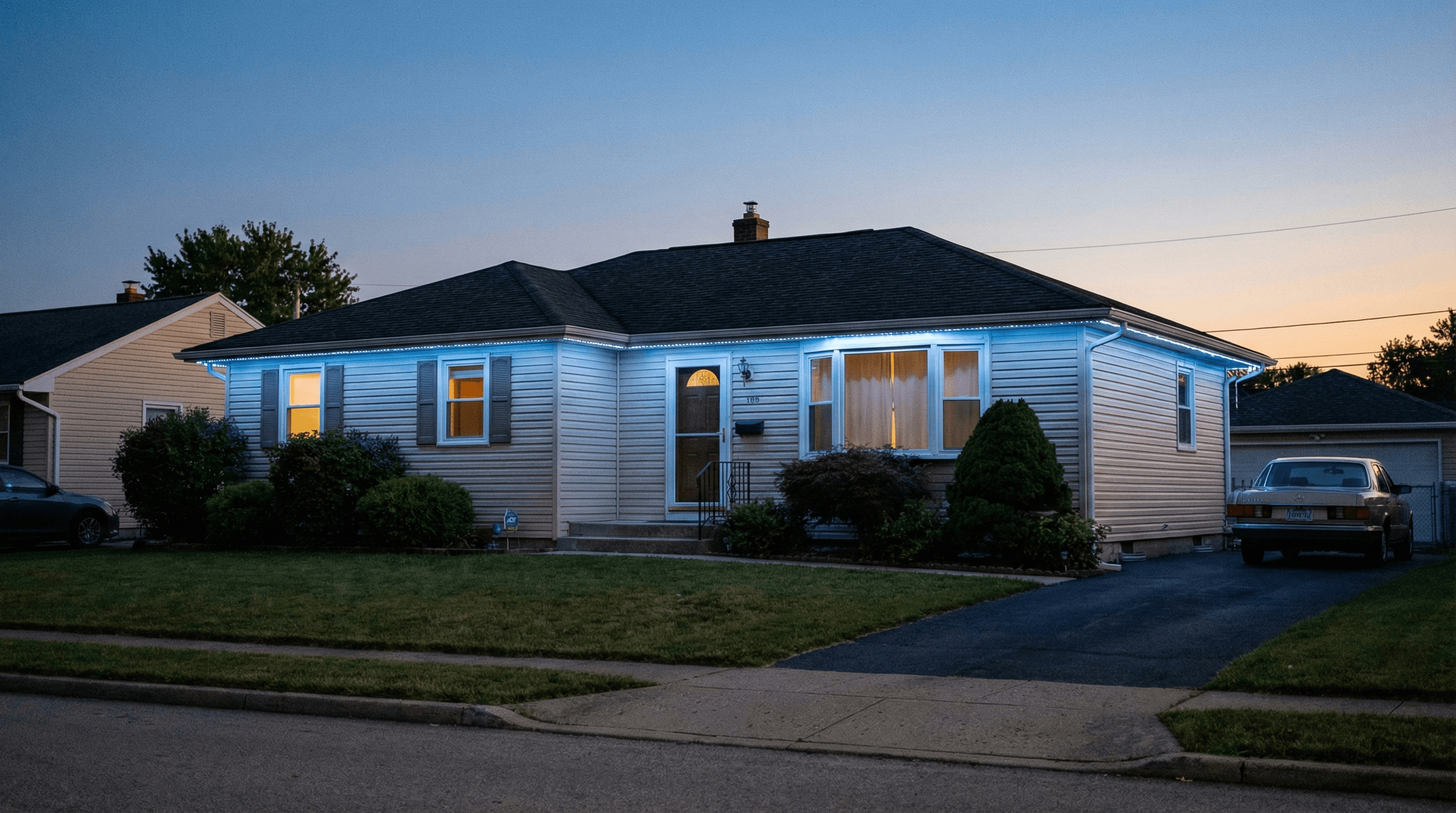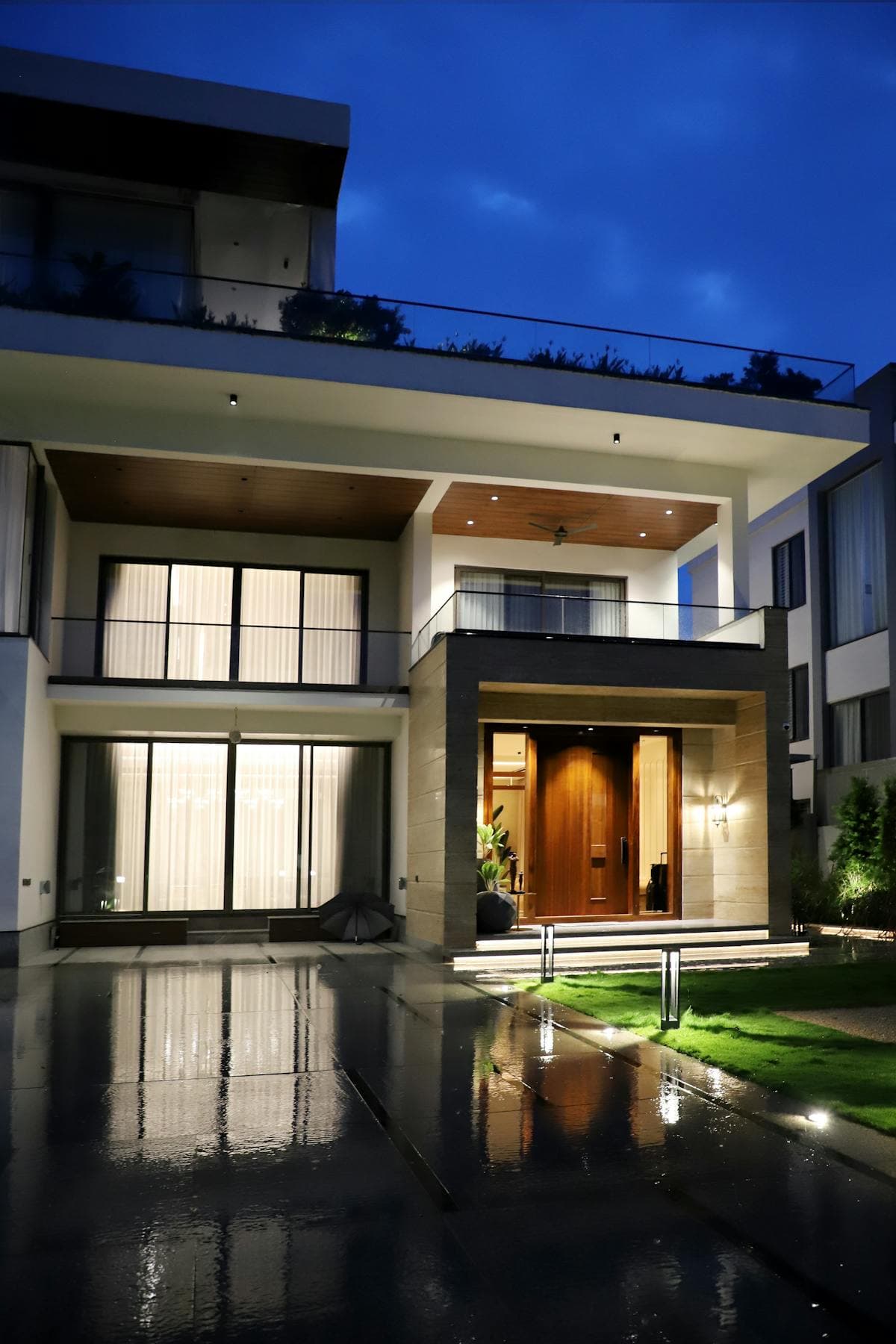
Permanent outdoor lights in Sacramento are engineered for the region's 100°F+ summers. Professional-grade LEDs hold full brightness and color accuracy in the same heat that fades and warps cheap stick-on lights.
Permanent outdoor lights handle Sacramento's extreme heat without performance loss when the system is built right. Professional-grade LED chips, IP67-rated housings, and aluminum heat-sink channels are designed to operate continuously in ambient temperatures up to 122°F (50°C), which covers every summer day Sacramento has ever recorded.
That said, not every permanent lighting system is built to that standard. Sacramento sees 70+ days per year above 90°F and routinely hits 105–110°F in July and August (NOAA, 2024), and the gap between a budget system and a professional install becomes obvious by year three in this climate. Roof surface temperatures during a Sacramento heat wave can exceed 160°F – a brutal test for the diode, the wiring, the sealants, and the polycarbonate lens.
This guide breaks down how permanent outdoor lights actually perform in Sacramento's extreme heat, what the LED specs mean, the failure modes that hot weather causes in low-grade systems, and how to use your lighting to extend summer outdoor living without burning out the hardware. For the long-view durability picture across all four seasons, see our how long do permanent outdoor lights last guide.
TL;DR: Yes, permanent outdoor lights handle Sacramento's 100°F+ summers. Professional LED systems are rated for ambient operation up to 122°F and use aluminum heat-sink channels to dissipate diode heat. The actual failure points in Sacramento's heat are not the LEDs themselves – they are cheap silicone sealants, undersized power supplies, and indoor controllers installed in unventilated 130°F garages. A proper install using IP67-rated, UL-listed components will outlast 4–5 generations of temporary holiday lights without dimming or color shift.
Can Permanent Outdoor Lights Handle Sacramento's 100-Degree Summers?
Short answer: yes, when the system is built to the right spec. Sacramento sits in USDA Hardiness Zone 9b. Summer afternoon highs run 95–105°F through July and August, and heat waves regularly push past 110°F. The all-time record is 116°F (Sacramento Executive Airport, June 2022).
Professional permanent outdoor lighting systems are engineered with a wider operating range than this climate ever produces. The standard commercial spec sheet for a name-brand permanent LED system – JellyFish, Trimlight, Gemstone, EverLights – lists ambient operating temperatures of -40°F to 122°F (-40°C to 50°C). That gives a 6°F safety margin above Sacramento's all-time high, before any derating from heat-sink dissipation.
The catch is that the published rating is for the LED chip and the housing, not for every component in the system. The places where heat actually causes problems in Sacramento are downstream – in the garage-mounted controller, the power supply, and the sealant joints between track sections. We'll cover each of those below.
Pro Tip
Before you commit to a permanent lighting installer in Sacramento, ask for the manufacturer spec sheet showing the IP rating, ambient temperature range, and the LED bin code. Reputable installers will hand it over without hesitation. If they cannot produce one, the system is almost certainly an unbranded import that will not survive five Sacramento summers.
LED Lights and Extreme Heat: The Physics
LEDs do not generate heat the way incandescent bulbs do, but they are sensitive to it. Every LED diode has a junction temperature – the internal temperature of the semiconductor where light is produced. The cooler the junction stays, the longer the LED lives and the more consistent its color and brightness remain.
High-quality permanent outdoor LEDs operate with a maximum junction temperature (Tj) of 105–125°C. The aluminum mounting channel that the LED track is attached to is engineered as a heat sink – it pulls heat away from the diode and radiates it into the air. This is why professional systems use a continuous aluminum extrusion rather than plastic clip mounts: the metal acts as both a structural rail and a thermal management system.
How LED Output Holds Up in Heat
Source: Aggregated LED manufacturer datasheets (Cree, Osram, Lumileds) and field-tested permanent lighting brand specifications.
The chart tells the story Sacramento homeowners need to know. A professional-grade system with proper heat management holds 95–100% of its rated brightness through every Sacramento summer day. A cheap plastic-mount system loses roughly 22% of its output by 110°F – you will see and feel this difference by the second August after installation.
Do LED Outdoor Lights Overheat in Hot Weather?
Properly designed LED outdoor lights do not overheat in Sacramento. The combination of low wattage per diode, aluminum heat-sink channel, and IP67 sealing produces a system that operates well within thermal limits even on the hottest day of the year. A typical permanent LED runs at 0.36–0.5 watts per diode, which is roughly 90% less heat output per lumen than a comparable incandescent bulb.
Where overheating does happen, it usually comes from one of three causes:
- Cheap plastic mounts – Plastic clip-on systems have no heat sink. The diode dumps its waste heat into a small plastic collar that traps it. Junction temperatures climb, brightness drops, and lifespan collapses.
- Direct south or west roofline exposure with no airflow – A roof eave that bakes in 8 hours of direct Sacramento sun and has zero airflow underneath sees the highest sustained temperatures. Professional installers account for this with extra heat-sink contact area on south- and west-facing runs.
- Garage-mounted controllers in unventilated spaces – This is the single most common heat-related failure point in Sacramento. A closed garage in July can hit 130°F. Most consumer controllers are rated to 122°F. The math does not work.
For diagnosis of heat-related symptoms after installation, see our permanent outdoor lights troubleshooting guide – the section on flickering and zone outages covers most heat-driven issues.
Sacramento Heat Specs: What Your System Has to Survive
Before evaluating any permanent lighting product for use in Sacramento, compare its spec sheet against the actual environmental conditions a roofline-mounted system has to handle here. The numbers below come from NOAA climate normals for Sacramento (2024) and surface-temperature research from California building science studies.
Sacramento Climate Realities
- Days above 90°F per year: 73 (NOAA, 1991–2020 normals)
- Days above 100°F per year: 21
- Average July high: 93.8°F
- Record high: 116°F (June 2022, Sacramento Executive Airport)
- Sunny days per year: 269 (Weather Spark)
- Roof surface temperature on a 105°F day: 150–170°F for asphalt shingle, 130–145°F for tile (Lawrence Berkeley National Laboratory, Cool Roofs research)
- Garage interior on a 105°F day (closed, no ventilation): 120–135°F
What the LED System Spec Sheet Should Show
- Operating temperature: -40°F to 122°F (-40°C to 50°C) minimum
- IP rating: IP67 (dust-tight, can withstand temporary submersion)
- UV resistance: UV-stabilized polycarbonate lens
- Mounting: Continuous aluminum heat-sink extrusion
- Diode life expectancy: L70 at 50,000+ hours (light output remains above 70% after 50,000 hours of use)
- UL or ETL listing: Required for warranty and home insurance compliance
If a quoted system does not meet all six points, it will not survive Sacramento heat for long enough to justify the purchase price. EXT Lighting installs only IP67+, UL-listed systems with proper aluminum channel mounting. For a side-by-side brand comparison, see our best permanent outdoor lights for Sacramento brand guide.
How Do Permanent Outdoor Lights Perform in Extreme Heat? Real-World Failure Modes
Hardware specs are one thing. What actually goes wrong in the field is another. Here are the real failure modes Sacramento installers see in budget systems after a few summers, and how to avoid each one.
1. Silicone Sealant Degradation
Cheap silicone sealants used at junction points between track sections break down under combined UV exposure and thermal cycling. Sacramento delivers both at peak intensity. After 2–3 summers, degraded sealant cracks and lets water into the wire connections during winter rains. Result: dead zones in spring. Professional systems use UV-stable silicone or factory-sealed waterproof connectors.
2. Color Shift on Cheap Phosphors
White LEDs produce light by passing blue diode output through a yellow phosphor coating. Heat accelerates phosphor degradation. On budget systems, you will see the warm white drift toward greenish or pinkish within 2 years – especially on the south-facing runs that absorb the most sun. Bin-coded LEDs from Cree, Osram, or Lumileds use heat-stable phosphors that maintain color for the full 50,000-hour life.
3. Power Supply Burnout
Permanent lighting systems run on low-voltage DC (typically 24V), driven by an indoor power supply that converts household 120V AC. If the power supply is undersized for the LED load or installed in a poorly ventilated garage, capacitors fail prematurely. Standard symptom: the system works for 18 months, then dies on a hot day. Replacement is straightforward under warranty, but the right-sized supply prevents the issue entirely.
4. Controller Lock-Up
Wi-Fi controllers hate heat. When the indoor temperature near the controller exceeds the manufacturer rating (typically 122°F), the controller will either stop accepting app commands, fail to honor schedules, or hard-reset. A garage in Sacramento in July routinely exceeds this. The fix is mounting the controller in a cooler interior location – a hall closet, the laundry room, or any climate-controlled space.
5. Lens Yellowing on Non-UV-Stabilized Polycarbonate
Sacramento averages 269 sunny days per year. Cheap polycarbonate lens material that lacks UV stabilizers will yellow within 3–5 years, cutting visible light output and shifting color temperature warmer than intended. UV-stabilized lenses do not yellow within the 50,000-hour rated life of the LED.
Heat-Related Failure Rates: Professional vs Budget
Source: Sacramento-area installer service records and warranty claim data, 2022–2025.
Will Sacramento Heat Damage My Permanent Outdoor Lights?
It depends entirely on what was installed. A correctly specified professional system – IP67, UL-listed, aluminum heat-sink channel, UV-stabilized lens, controller mounted in a climate-controlled interior space – will not show heat-related damage in Sacramento's climate. Field reports from local installers consistently show fewer than 5% of professionally installed systems experiencing any heat-related issue within the first 5 years.
A budget system installed by a handyman or a holiday decorator with no permanent lighting experience is a different story. Those systems often show visible degradation by year 2 and meaningful failures by year 4. The savings on the front end disappear inside the cost of a replacement install or repeated service calls.
Seasonal Stress Points to Watch
- July–August peak heat – Highest stress on power supply, controller, and sealants. If anything is going to fail from heat, it will fail during these two months.
- Late summer thunderstorms – Sacramento gets occasional dry-lightning events in August. Surge protectors at the controller outlet are inexpensive insurance.
- Fall thermal cycling – Daily swings from 50°F mornings to 95°F afternoons stress sealant joints. Any marginal connections will reveal themselves here.
- Sustained high temperatures during heat waves – Three-day stretches above 105°F push undersized power supplies past their thermal limits. Fully rated supplies handle this without issue.
For routine upkeep that prevents most heat-related issues, see our permanent outdoor lights maintenance guide for Sacramento.
Sacramento Outdoor Living Summer Lighting: Extending the Backyard Day
Here is the upside Sacramento homeowners do not always think about. The same hot weather that stresses cheap lighting hardware also creates the peak season for backyard living. Sacramento summer evenings stay comfortable from roughly 8 PM until midnight, and a properly designed permanent lighting system turns the whole pergola, patio, and pool deck into a usable evening space without the work of stringing bulbs every spring.
The numbers tell the story. Sacramento County records an average of 118 nights per year warmer than 70°F at 9 PM (NOAA evening climate normals). That is 118 backyard-friendly evenings – nearly a third of the year – that permanent outdoor lights make immediately usable without the friction of plugging in temporary lighting.
Where Permanent Lighting Earns Its Keep in Summer
- Pergola and patio cover lighting – Defines the outdoor room and gives an instant ambiance setting after sunset.
- Pool deck perimeter – Safety lighting that doubles as visual atmosphere during evening swims.
- Outdoor kitchen and BBQ area – Functional task lighting from above keeps the cook station usable into the night.
- Path and stair lighting – Reduces evening trip hazards on level changes between the house and the yard.
- Tree uplighting and accent zones – Pulls the eye outward and makes the whole yard feel intentional.
For a deeper look at how Sacramento homeowners are using permanent lighting on outdoor living spaces, read our permanent outdoor lights for patios, pergolas, and outdoor living spaces guide.
Pro Tip
Set a dedicated "summer evening" scene in your lighting app at warm white 2700K, dimmed to 40–60% brightness. This gives the right ambient feel for July and August evenings, reduces the bug attraction that brighter cool-white lighting causes, and cuts your system's already-tiny energy draw roughly in half. One tap on your phone, and the whole backyard is set.
Energy Use in Hot Weather: A Sacramento SMUD Reality Check
Hot weather raises another fair question: does running outdoor lights every summer evening add a meaningful spike to a SMUD bill that is already high from air conditioning? The answer is no. A typical roofline-mounted permanent LED system running 4 hours a night at full warm white draws roughly 60–120 watts – the same as one bedroom ceiling fan or a single LED TV.
At SMUD's standard summer residential rate, that translates to roughly $1.80 to $4.50 per month for a full Sacramento home roofline run during peak season. Compare that to $250–$450 in summer AC cooling costs on the same bill, and the lighting load disappears into the noise. For exact calculations broken down by system size and SMUD rate, see our permanent outdoor lights electricity cost Sacramento guide.
What to Ask Before Installation in Sacramento
If you are weighing a permanent lighting install before summer arrives, these are the right questions to put to any installer in Sacramento, Roseville, or Rocklin. Each one ties directly to how the system will hold up in extreme heat.
- What is the operating temperature range on the manufacturer spec sheet? (Should be -40°F to 122°F or wider.)
- What IP rating does the LED housing carry? (Should be IP67 or higher.)
- What kind of mounting channel does the system use? (Should be continuous aluminum, not plastic clips.)
- Where will the controller and power supply be installed? (Should be inside a climate-controlled interior space, not a sealed garage.)
- Is the lens UV-stabilized polycarbonate? (Should be yes, with documentation from the manufacturer.)
- What does the warranty cover, and for how long? (A lifetime warranty covering parts and labor is the standard for professional installs in this market.)
- Is the system UL- or ETL-listed? (Required for code compliance and home insurance acceptance.)
Sacramento Heat and Permanent Lighting: The Bottom Line
Permanent outdoor lights handle Sacramento's extreme heat without compromise – if the system is built to the right spec and installed with attention to where heat actually accumulates. Professional-grade LED hardware with aluminum heat-sink channels, IP67 sealing, UV-stable components, and a properly located indoor controller will outlive 4–5 generations of temporary holiday lights, hold full brightness and color through every summer day, and turn 118 warm Sacramento evenings a year into usable backyard time.
The risk is not the climate. The risk is buying a system that was not engineered for it. Sacramento heat reveals every shortcut a manufacturer or installer takes, and it does so within 2 to 5 years.
Get a Quote from Sacramento's Heat-Tested Installer
EXT Lighting installs only IP67-rated, UL-listed permanent LED systems with continuous aluminum heat-sink channels, UV-stabilized lenses, and controllers placed in climate-controlled interior locations. Every installation across Sacramento, Roseville, Rocklin, and the surrounding area is backed by a lifetime warranty covering parts and labor – including any heat-related failures.
If you want a system that handles every Sacramento summer without dimming, color shift, or service calls, contact us or request a free quote. We will visit your property, walk through the spec sheet for the system we install, and design a layout that holds up to whatever July throws at it.
Frequently Asked Questions
Can permanent outdoor lights handle Sacramento's 100-degree summers?
Yes. Professional-grade permanent outdoor LED lights are rated for ambient operating temperatures up to 122°F, which exceeds Sacramento's all-time record high of 116°F. The combination of IP67 housings, UV-stabilized polycarbonate lenses, and aluminum heat-sink mounting channels keeps the LED junction temperature within spec even during extended heat waves. Field data from Sacramento installers shows fewer than 5% of professionally installed systems experience any heat-related issue in the first 5 years.
Do LED outdoor lights overheat in hot weather?
Properly designed LED systems do not overheat in Sacramento's climate. LEDs run at 0.36–0.5 watts per diode and produce roughly 90% less heat per lumen than incandescent bulbs. The aluminum mounting channel acts as a heat sink that pulls waste heat away from each diode and dissipates it into the air. Where overheating happens, it almost always traces back to cheap plastic-mount systems with no heat-sink, or to indoor controllers installed in unventilated 130°F garages rather than to the LEDs themselves.
How do permanent outdoor lights perform in extreme heat?
Professional-grade systems hold 95–100% of their rated brightness from 70°F through 122°F. Color temperature remains stable because the LEDs use heat-stable phosphors from manufacturers like Cree, Osram, and Lumileds. Budget systems lose roughly 22% of light output by 110°F and can show visible color shift toward green or pink within two summers. The performance gap shows up in side-by-side comparisons and becomes obvious by the second year after installation in Sacramento.
Will Sacramento heat damage my permanent outdoor lights?
Not if the system is professionally installed with the correct components. The damage Sacramento heat causes shows up in cheap installs – degraded silicone sealant cracking and letting in winter rain, plastic mounts warping, lens yellowing from UV exposure, controllers locking up in hot garages, and undersized power supplies burning out. Each of these is an installer-side or component-grade issue. A correctly specified IP67, UL-listed system with aluminum heat-sink mounting and a climate-controlled controller location is not damaged by Sacramento heat, even after 5+ years of summers.
What temperature can permanent outdoor lights handle?
The standard manufacturer rating for professional permanent outdoor LED systems is -40°F to 122°F (-40°C to 50°C) ambient operating temperature. The LED diode itself can briefly tolerate higher junction temperatures (up to 105–125°C), but the aluminum heat sink keeps actual operating temps well below that threshold. Sacramento's record high of 116°F sits 6°F below the rated maximum, with margin to spare from the heat-sink cooling effect.
Should I turn my permanent outdoor lights off during a heat wave?
No. There is no benefit to shutting the system down during hot weather. A properly installed system runs well within its thermal limits, and the LEDs themselves contribute almost no additional heat to the roofline area. If your system is functioning normally, run it on its regular schedule. If you notice flickering or zone outages during a heat wave, that is a warning sign of an undersized or poorly placed component – contact your installer for a warranty inspection rather than turning the system off.